Across India’s farmlands, irrigation is emerging as a key driver of agricultural resilience in a changing climate. Today, irrigation supports more than half of the country’s cultivated land and is powered by nearly 32 million pumps, closely linking agriculture with rising energy use and emissions. Estimates suggest that groundwater irrigation alone accounts for nearly a tenth of India’s total carbon emissions, highlighting the environmental cost of groundwater extraction and the pressing need to transform how farms are powered.
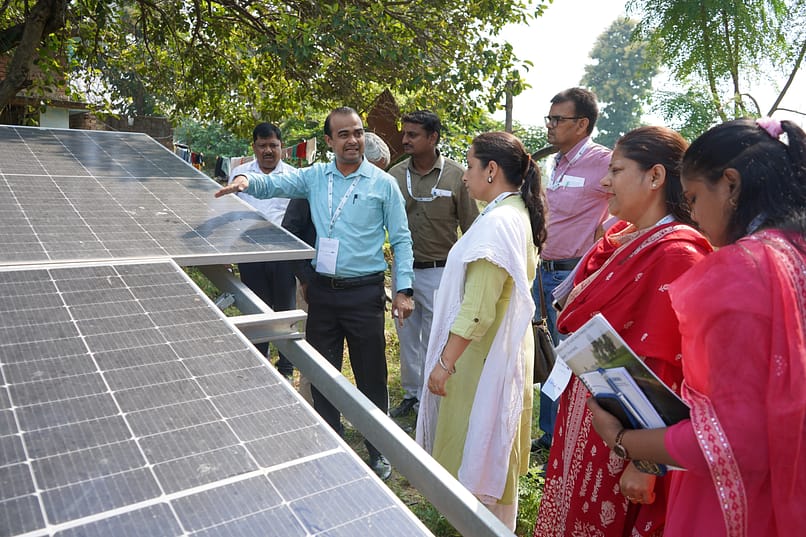
In this context, solar irrigation pumps (SIPs) offer a promising path forward. As they help to reduce emissions, lower irrigation costs and improve the reliability of water access, SIPs align closely with India’s clean energy and agricultural resilience goals.
A significantly higher number of SIPs has been installed thanks to publicly funded subsidy programs, most notably the Pradhan Mantri Kisan Urja Suraksha Evam Utthaan Mahabhiyan (PM-KUSUM) scheme, which was established to de-carbonize farming. Since PM-KUSUM was introduced, over two million farmers have adopted solar energy for irrigation.