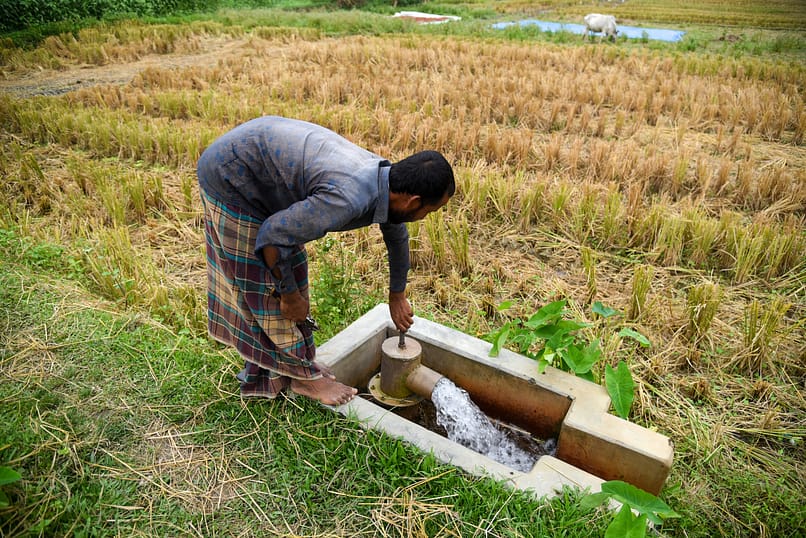
A farmer opens the water connection pipe to flood his paddy field in Thakurgaon, Bangladesh. The irrigation, supported by a Solar Irrigation Pump (SIP) installed by IDCOL and its partner organization, helps ensure timely water access and improved crop productivity. Photo: Tanmoy Bhaduri/IWMI
Solar-powered irrigation systems are increasingly promoted worldwide for their potential to reduce agricultural carbon emissions and improve water, energy and food security. However, there are ongoing concerns that the near-zero operational cost of solar irrigation could lead to over-pumping and accelerate groundwater overexploitation.
Understanding how farmers change the way they pump water after switching to solar power is key to predicting what it will mean for groundwater over time.
Currently, around 1.6 million pumps are used for groundwater irrigation in Bangladesh, 80% of which are diesel pumps, while electric and solar pumps account for the rest. Most of this irrigation is used for the cultivation of water-intensive Boro rice in regions where the sustainability of groundwater is already under threat.