
Phase 1
The Solar Energy for Agricultural Resilience (SoLAR) Phase I project (December 2019 – May 2025) was implemented in South Asia (India, Bangladesh, Nepal, Pakistan). Supported by the Swiss Agency for Development and Cooperation (SDC) and implemented by the International Water Management Institute (IWMI), the program focused on building an enabling environment for the adoption of solar irrigation solutions. It aimed to generate evidence, pilot innovative business and institutional models, and strengthen policy frameworks to support sustainable, inclusive, and climate-resilient solar energy use in agriculture.
Where we work
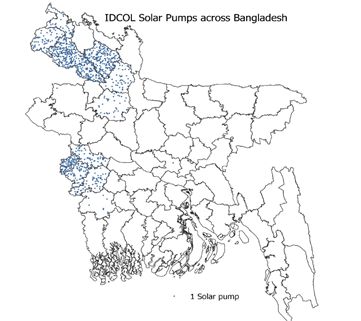
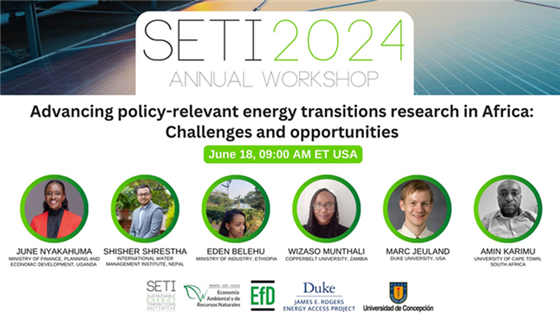
Distribution of SIPs in India (1 dot = 100 pumps) The Government of India launched the “Jawaharlal Nehru National Solar Mission” (JNNSM) in January 2010. The JNSSM overall target of 100 GW of grid-connected solar power by 2022. SIPs formed only a small portion of JNSSM work in the early phases due to the high cost of installation. Bangladesh has 1.6 million pumps, of which approximately 21% are electric-powered and the remainder diesel-powered. Boro rice is central for achieving food security in Bangladesh and almost entirely irrigated using diesel pumps. Bangladesh spends approximately USD 2.6 billion per year on imported diesel. The country pledges to make a 20% reduction of GHG emissions by 2030. Renewable Energy Policy of Bangladesh, 2008 has set a target to obtain least 10% of its power needs through renewable sources by 2020. Currently, Bangladesh has installed 573 MW of renewable energy, of which 339 MW is solar, and 28 MW comes from 1,337 solar irrigation pumps. Majority of the solar pumps are installed by IDCOL and the rest through a variety of sources, such as the Bangladesh Agricultural Development Corporation, Bangladesh Rural Electricity Board (BREB), and the Barind Multipurpose Development Authority (BMDA) Presentation by IWMI researchers at the SETI Annual workshop Bangladesh Prime Minister Sheikh Hasina says “the use of solar power should be increased and tax on solar panels can be lifted to encourage private sector investment in this sector.” After the meeting at the NEC Bhaban, Planning Minister M.A. Manan said that the prime minister has ordered a 100% transition to solar power for irrigation, instead of diesel. This commitment from the PM to replace all diesel irrigation pumps with solar is important since it is likely to have transformative effects on the groundwater market in Bangladesh, with wider implications on food security, groundwater sustainability, and energy security amongst others. Research reports and discussions with key stakeholders under the SoLAR project played a role in sensitizing the SoLAR policy environment in Bangladesh. SoLAR Team Visits SIP Sites in Gaibandha, Birganj and Dinajpur A two-member team from SoLAR-SA, Bangladesh along with personnel from its partnering organization, IDCOL visited several SIP sites in the Gaibandha, Birganj and Dinajpur districts of Bangladesh from 11th to 13th February 2022. The purpose of the visit was to understand the operational mechanisms, design and technical details through interaction SIP operators and field partners. IWMI’s First Monitoring Visit to SIP Implementation Sites in Bangladesh From 21st February to 1st March 2022 a two-member team from IWMI, SoLAR – Bangladesh visited 10 sites, five each in Northwest and Southwest Bangladesh. These visits were to monitor the progress of the implementation work carried out by NGO Forum, and to measure the flow rates of the SIP vis-à-vis the diesel pumps. AEPC financed solar irrigation pumps in Nepal The Government of Nepal (GoN) has been supporting the promotion and development of Renewable Energy Technologies (RETs). To date, Nepal has approximately 1,600 SIPs, 75% of which have been financed and installed by AEPC, and the remainder by a number of NGOs and INGOs such as IDE, ICIMOD, Winrock, and Practical Action. Until the start of the 13th Plan (2013-2016), the use of solar energy for irrigation and drinking water was limited to hilly and remote areas. The 13th Plan incorporated ideas for solar energy for irrigation in the Terai. In the 2018-19 budget, the central government allocated NPR 350 million (~USD 3.5 million) as grants for SIPs and pledged additional support to renewable energy production if initiated by cooperatives and local communities in collaboration with the local government. The 14th Plan also initiated a subsidy for solar drinking water and irrigation systems at the individual, community, and institutional (i.e., private sector) levels. The AEPC—our main partner in SoLAR project, is the main institution responsible for the implementation of the Renewable Energy Subsidy Policy, 2016. In addition to the AEPC, a number of government organizations are working to promote and implement SIP projects in Nepal. The majority of solar projects have been implemented in provinces 2, 3, and 4. The private sector plays a very important role in Nepal, given that the subsidy delivery modality is driven by the private sector. SETI 2024 Annual Workshop, titled “Can Fee for Service Model for Micro Solar Irrigation Pumps Be Scalable and Sustainable?” was held on June 18, 2024. Shisher Shrestha led the discussion, focusing on policy research related to energy for development. The workshop explored the potential for scalability and sustainability of a fee-for-service model for micro solar irrigation pumps. IWMI Pakistan SoLAR Team Engages with World Bank and OFWM, Hosts Science Forum Additionally, from May 6th to May 9th, 2024, IWMI Pakistan organized a Science Forum that featured team-building activities and strategic discussion sessions. The SoLAR team in Pakistan presented comprehensive insights into the SDC’s SoLAR-SA project objectives, progress, and achievements to date. Strategic discussions by IWMI Pakistan with Centre of Excellence in Water Resources Engineering (CEWRE) Research on Solar Pumping: A key focus at the Pakistan Water Week (L-R): Dr. Adeel Waqas (NUST University), Hafiz Qaiser (OFWM, Punjab), Mr. Francois Onimus (World Bank), Mr. Muhammad Nasir Jamal (CEO, Rabail Technologies) Dr. Claudia Ringler (IFPRI), Eng. Tahir Anwar (Ex DG FWMC), Dr. Azeem Ali Shah (IWMI), Eng. Kifayat Zaman (DG, FWMC) Fourth Pakistan C-PMC Meeting held at CEWRI IWMI signs MoU with Pakistan Agricultural Research Council of Ministry of National Food Security and Research, Government of Pakistan Expanding on International Water Management Institute’s (IWMI) mission to provide sustainable and climate friendly water solutions..Read more.. IWMI signs MoU with Federal Water Management Cell of Ministry of National Food Security and Research, Government of Pakistan IWMI Pakistan hosts online training on WinSRFR Model A telephonic survey in Pakistan to understand the water use pattern of SIP farmers Pakistan holds 2nd Country Project Management Committee (C-PMC) meeting: where does access to solar irrigation stand? Stakeholders from IWMI, Federal Water Management Cell (FWMC), Pakistan Agricultural Research Council (PARC), On Farm Water.. Meeting and field visit at Pakistan Agricultural Research Council, Islamabad A detailed meeting at the PARC office in Islamabad was held between the Director of PARC and the Country Lead of the SoLAR project.. Field Visit of Precision Surface Irrigation Site in Rahim Yar Khan and inspection of the field trials IWMI, under the SDC, funded SoLAR project, has partnered with Khawaja Fareed University of Engineering and Information Technology (KFUEIT).. Training session for Farmers and Technicians on Operation and Maintenance of Solar Pumping Unit and Precision Surface Irrigation A training session was organized for farmers and technicians on the afternoon of 31 March 2021 at the Khwaja Fareed University of Engineering.. Rapid Enumeration of SIPs and Diesel Pump Farmers in Pakistan A rapid enumeration survey was conducted with SIP farmers between May-June 2021 to collect data for a group of farmers across three districts of Punjab in Pakistan. Training on Google Earth Engine Applications at KFUEIT Professionals and young engineers were trained on ‘Google Earth Engine Applications in Water Management and Role of Telemetry on Water Accounting’ on 24 November 2021. IWMI Pakistan Conducts Behavioral Study in Chakwal and Jhang Six hundred farmers are being surveyed in three districts of Punjab, viz., Chakwal, Jhang and Rahim Yar Khan, under the SDC-SoLAR project in Pakistan.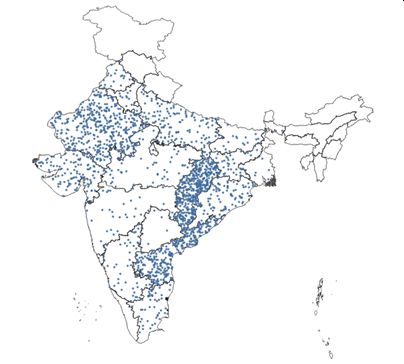
The Government of India released the “National Solar Pumping Scheme for Irrigation and Drinking” in 2014, with a target to support 1 million SIPs by 2020-21. In 2018, the Government of India announced its Kisan Urja Shakti evam Utthan Mahabhiyan (KUSUM) program for solarizing agriculture. Currently, there are over 200,000 solar irrigation pumps in India.
Gujarat launched a scheme called Surya Kisan Yojana (SKY) to solarize electric feeders supplying electricity to groundwater tubewells. So far, around 80 or so SKY feeders has been solarized. Solar project with work in Gujarat in close collaboration with GERMI to understand institutional aspects of the SKY scheme.
Country Updates
Country Updates
Archisman Mitra presented a paper titled State of Solar Irrigation in Bangladesh: Learnings for Solarization in off-grid areas in the SETI 2023 Annual workshop held on June 16, 2023. As the title suggests, the context was set by talking about the water food energy climate nexus in Bangladesh. The presentation highlighted the fact that diesel dependency creates energy insecurity and puts a financial burden on the country and that diesel use in the agricultural sector contributes to roughly 3.5 million metric tonnes of CO2 emission annually. Alternative models of solar irrigation were highlighted, and the mitigation benefits of SIPs reduced diesel use were explained. Also, multiple co-benefits of the IDCOL SIP model were explained as to how they are very convenient for buyers (lower cost, time savings for users, and underground pipes leading to savings in land and labour for creating field channels).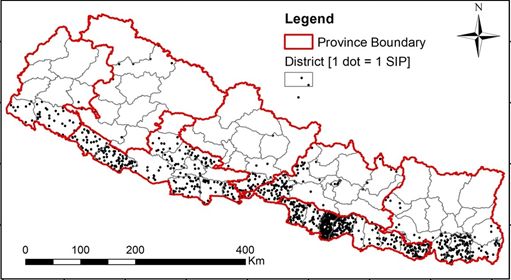
Country Updates
IWMI participates in GIZ – Green Skills Workshop
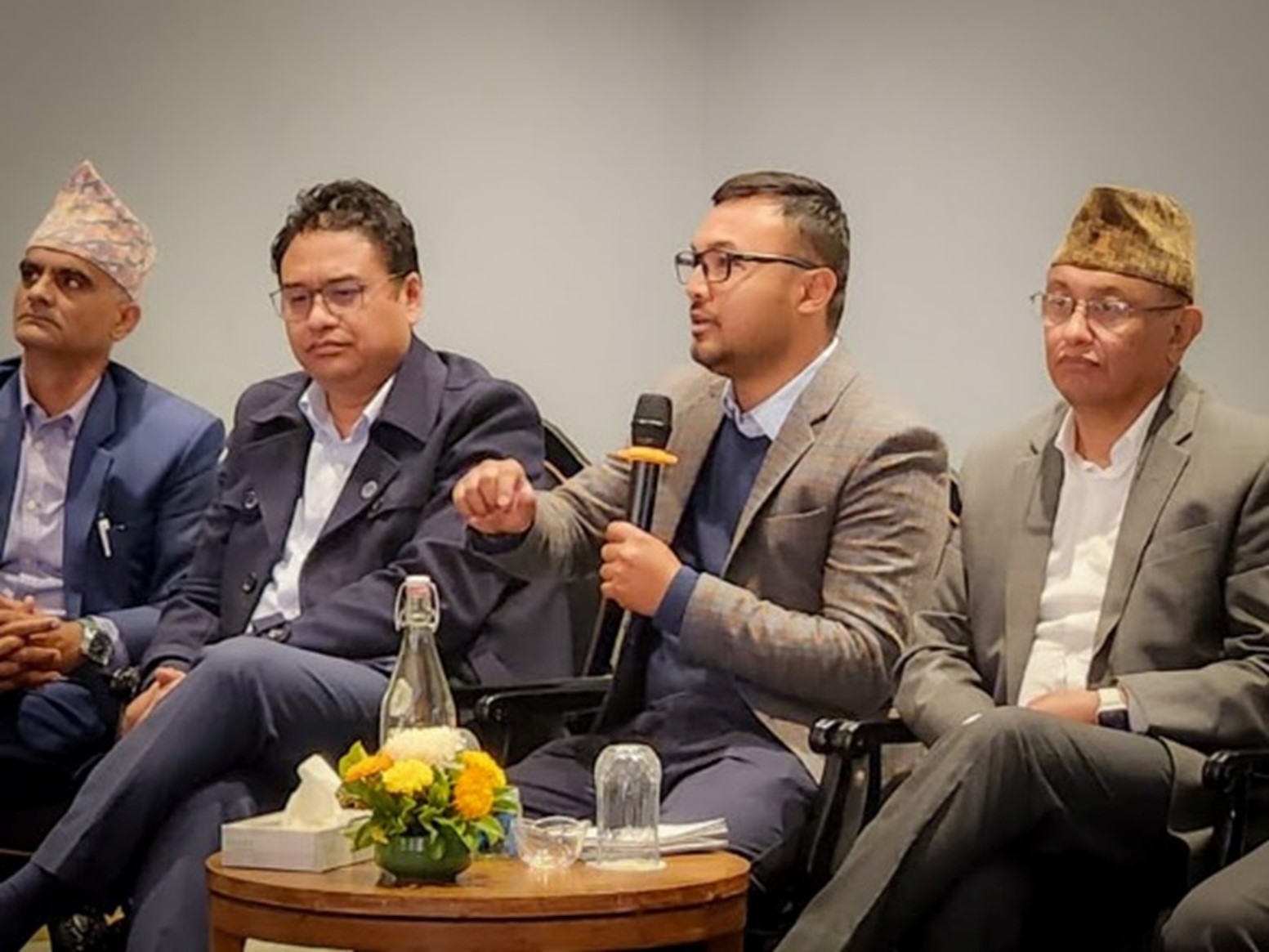 Green Skills: Qualifying Professionals for Work in the SOLAR PV Sector” was organized by GIZ POSTED on January 26, 2024, to highlight the importance of local technicians for sustainable operation of Solar Irrigation Pumps. Shisher Sreshtha, National Researcher rom IWMI Nepal participated as a panelist in that workshop and highlighted AEPC and IWMI’s role in consolidating knowledge products and training materials to produce government endorsed certification courses to ensure sustainability. The panel discussion focused on the perspective of development programs (i) One-off trainings vs. institutional training offerings (ii) Capacity development needs of the next 5 years and (iii) The role of AEPC and training providers for making training offerings in the solar PV sustainable.
 Knowledge Forum on Transformative actions for Inclusive and sustainable water management in Nepal
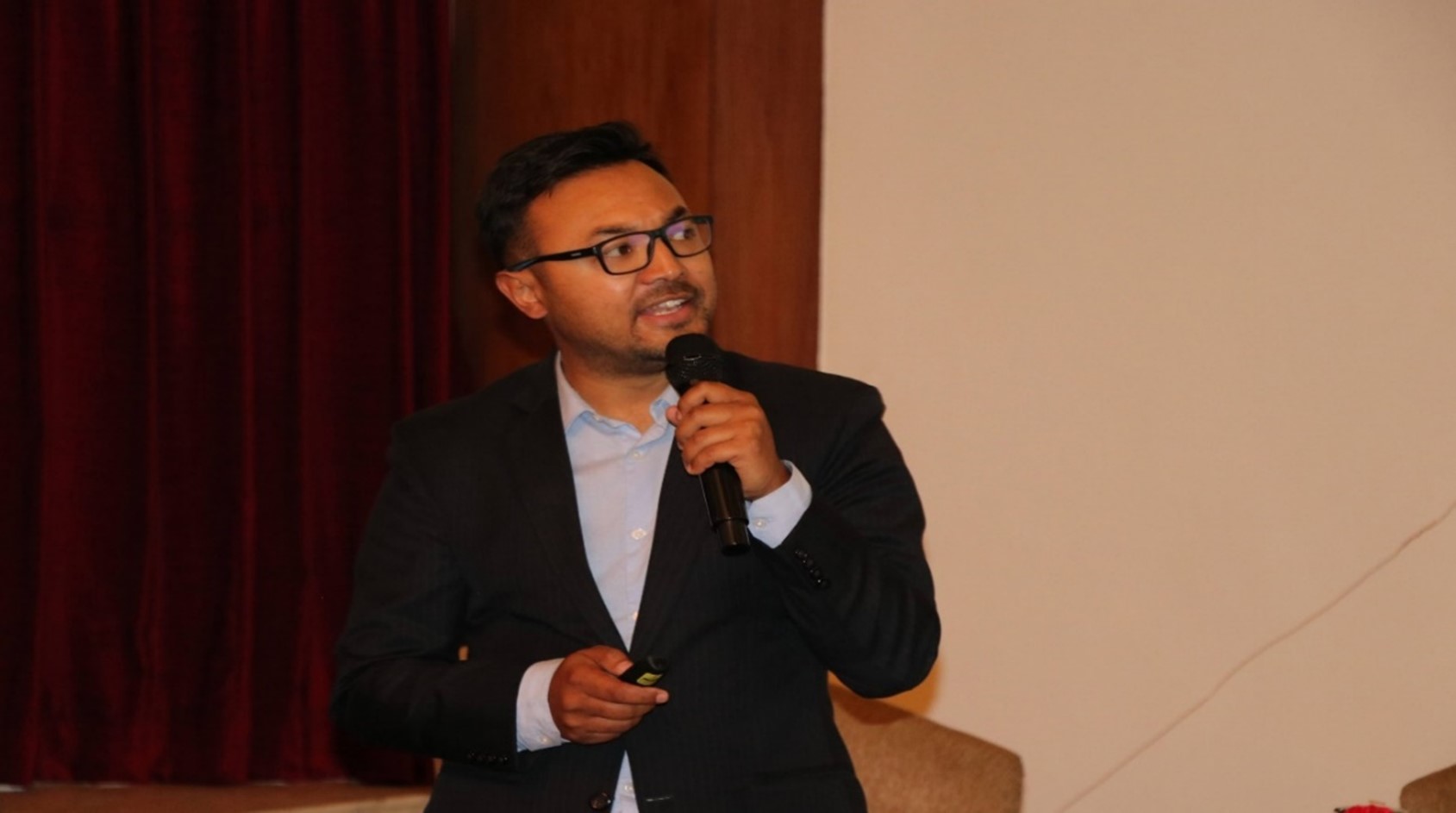 The Nepal National Water and Weather Week organized by IWMI Nepal on March 17, 2024, celebrates the World Water Day (WWD) and World Meterological Day (WMD) to raise awareness about sustainable water management and encourage discussions on water-related issues and climate action in Nepal. At the forum, Shisher Shrestha made a presentation on “Learnings from Grid-connected Solar Irrigation Pilot” where he presented preliminary findings from the SoLAR Grid-connected Solar Irrigation pilot in Chhipaharmai Rural Municipality in Parsa.
IWMI advocacy leads to signing of Net Metering Agreement with Nepal Electricity Authority
With constant advocacy by IWMI under SoLAR Project, the Net-metering Agreement got signed between Nepal Electricity Authority (NEA), Pokhariya and Surya Urja Krishak Samuha in Chhipaharmai on February 26, 2024. Under net metering, the power utility body takes accountability of 90% of bill amount, and 10% is what the consumer pays to NEA. Surplus electricity is fed to the national grid, which is an advantage in terms of optimal utilization of resources minimizing the risk of abundant energy being unused. The connection to the national grid exhibits farmers’ year-round irrigation supply despite weather constraints. Net metering is crucial for encouraging citizens to produce clean energy from solar power. In the long-run, net metering ensures energy security in the country. This is one of the major achievements for the project, paving the way for other projects exploring grid-connected solar irrigation.
Transforming Agrifood Systems in South Asia (TAFSSA)-Cereals Systems Initiative for South Asia (CSISA) GW Symposium
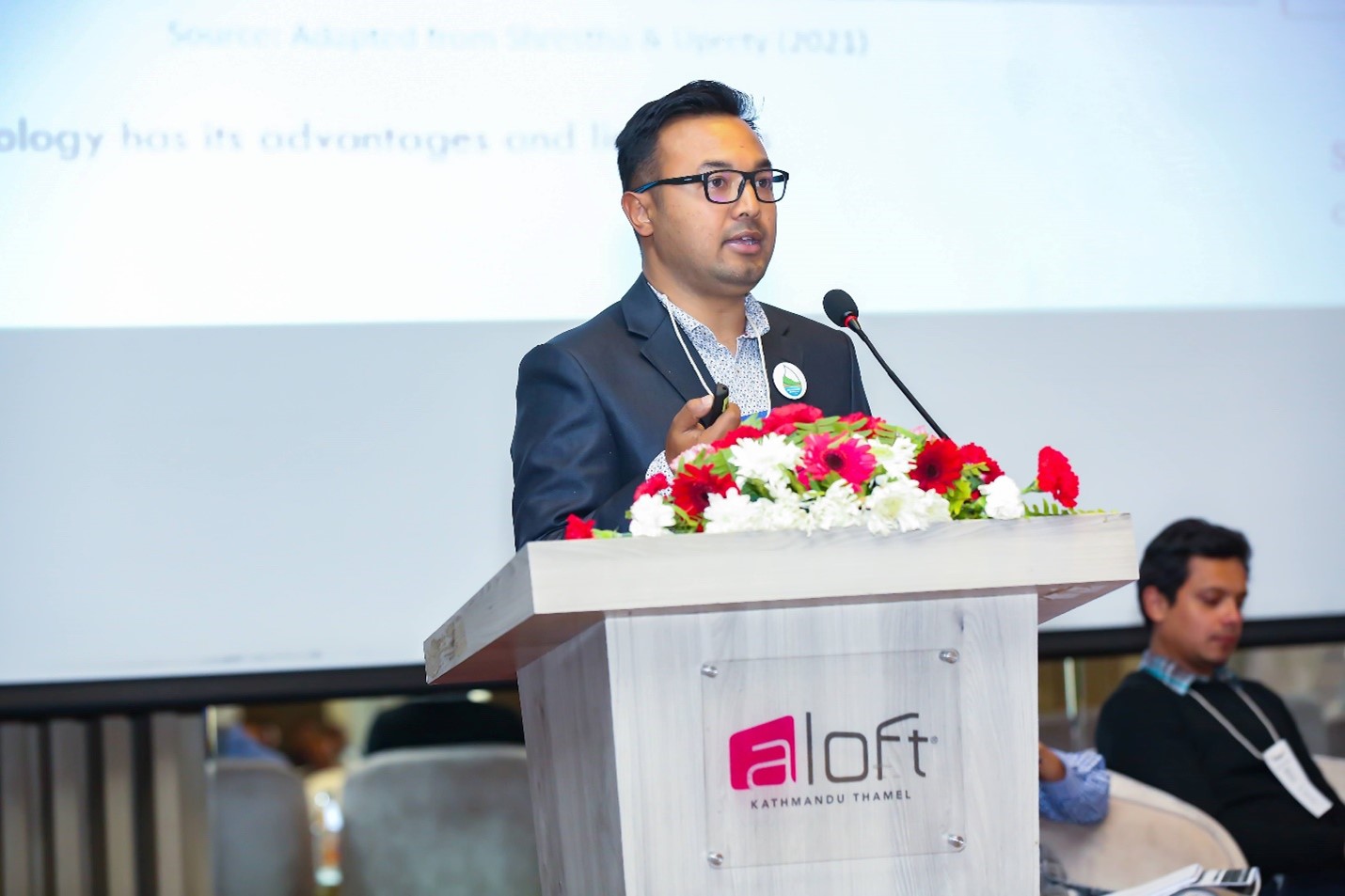
On 18 March a Groundwater Symposium was organized at Hotel Aloft, Kathmandu by Centre of Research for Environment, Energy and Water (CREEW), The Small Earth Nepal (SEN), and the Kathmandu Valley Water Supply Management Board (KVSWMB) in association with 22 national and international organizations focused on exploring the ‘Challenges and Opportunities for Sustainable Development and Management of Groundwater’. The event showcased sessions on strengthening groundwater governance in Southeast Asia, navigating emerging socio-hydrologies in Nepal, innovative approaches to address groundwater challenges, and inclusive groundwater development in Nepal. Shisher Srestha presented on the topic Energy technologies for pumped Groundwater Irrigation – Spread, opportunity, and challenges in Nepal. The session was hosted by TAFSSA-CSISA and was a part of Session 1: Knowing Groundwater: the socio-eco-technological context in Nepal. The presentation highlighted that Nepal is gradually moving away from fossil fuel-based irrigation to more sustainable energy sources such as solar and grid.
Climate resilience and sustainable water management: IWMI Nepal’s active engagement at COP28
IWMI Nepal’s active involvement at COP 28, led by Dr. Manohara Khadka, Country Representative of IWMI Nepal, made significant contributions to the discourse on climate resilience and sustainable water management. The side events held on the 9th and 10th of December brought together experts, policymakers, and stakeholders to explore the intricate interplay of water, energy, food, and ecosystems in addressing the challenges posed by climate change in South Asia. As a panelist in another four side-events, Khadka shared IWMI’s research experience and knowledge about interconnected links between water and climate change, and the role of water in climate change adaptation and mitigation. Speakers at the COP28 side event spoke about comprehensive strategies for South Asia to prepare for emerging climate risks
SoLAR Grid-connected SIP pilot presented in Asia Sector-specific Meet: Agriculture and Food Security
Shisher Shrestha made a virtual presentation in the Asia Sector-specific Meet (Sustainable Agriculture and Food Security) on March 31, 2023. Titled Opportunities and Challenges for Grid-connected Solar Irrigation in Nepal – Lessons from SoLAR Pilot Project, he highlighted the emissions due to diesel irrigation pumps and mentioned the findings that say that diesel pump consumes 13,870 m3 (kl). Shrestha presented the summary of findings from the impact evaluation studies conducted as part of the SoLAR-SA project. The evaluation study found that the impacts were mostly positive for SIP farmers since there was a strong reduction in the use of diesel pumps for SIP farmers compared to non-SIP farmers; SIP owners tend to devote more land to vegetables and SIP farmers earn 10% more revenue compared to non-SIP farmers. The presentation focussed on opportunities that exist for grid-connected Solar irrigation – a) reduces e-waste by utilizing out-of-warranty and abandoned systems b) is a dual source of clean energy for improved irrigation for farmers c) improved Capacity Utilization of SIPs d) potential to increase energy consumption in the agriculture sector for NEA d) localized generation from Solar will improve the grid voltage, reduce strain on the grid’s infrastructure and minimize transmission loss. The hurdles for implementing the grid-connected solar irrigation pilot were identified so the implementation process is not clear; and, there is a lack of policy for grid-connected solar irrigation, hence, awareness and capacity-building is needed at the local level (LG and NEA), etc. Also, no clear-cut direction on who should lead the implementation of grid-connected SIP projects – NEA, AEPC, Local government or the Farmer User Group – is there.
Innovation Fund Grantee Workshop and Coordination for Micro-Grid Pilot
Between the 20th and 23rd of February, a three-member team from SoLAR –Nepal travelled to Chitwan and Parsa to monitor a workshop held by Ghampower, a SoLAR IF grantee, in Chitwan and to coordinate procurement and implementation of the micro-grid pilot with Nepal Electricity Authority, Pokhariya. Mr Zarrif Hussen, an ex-official of APEC..
The Director of the Alternative Energy Promotion Centre (AEPC), Nepal deliberates on recommendations by IWMI
The Executive Director of the Alternative Energy Promotion Centre (AEPC), Mr Madhusudhan Adhikari, convened a meeting, with researchers..Training of Technicians on Solar Water Pumping Systems – Nepal
In order to improve the technical knowledge and capacity of local technicians and engineers on solar water pumping systems, Pathibhara..The IWMI-Nepal team visits two Municipalities to select sites for the SIP micro-grid connection pilot
The predominant model in Nepal is stand-alone off-grid solar irrigation pumps (SIPs). These SIPs reduce the use of dirty diesel fuel to a large extent..Feasibility Studies Prove Chhipaharmai Rural Municipality As Potential Pilot Site
As the country slowly opened up after a disturbing second wave of the Covid-19 pandemic, IWMI conducted a survey at two sites in Nepal Tarai..IWMI Nepal Conducts Field Visits to Explore GESI Impact of SIPs
IWMI Nepal researchers conducted a 6-day field trip to explore the GESI (Gender Equality and Social Inclusion) impact of SIP models from November 12-17, 2021.SIP Training Imparted to Technicians in Saptari and Rautahat
With the rising popularity of Solar Irrigation Pumps (SIPs) among farmers, the installations of the same have been gaining momentum over the years.Letter of Intent Signed between 4 Parties in Nepal
A Letter of Intent (LoI) has been signed between Chhipaharmai Rural Municipality, Nepal Electricity Authority (NEA), Alternative Energy Promotion Center (AEPC) and International Water Management Institute (IWMI) to support the SoLAR project in Nepal.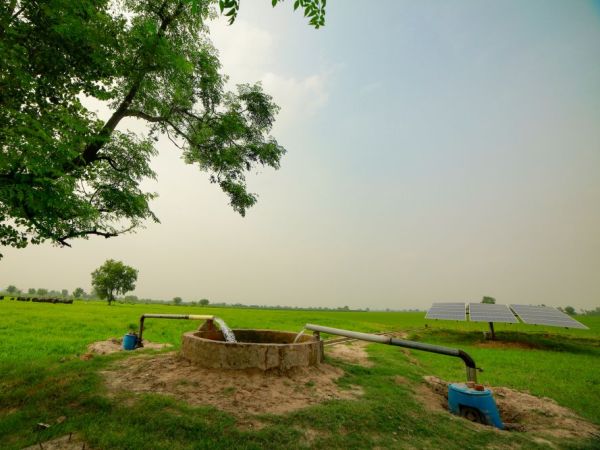
Pakistan does not have a specific solar irrigation policy. In 2015, the federal government of Pakistan announced a scheme for subsidizing small farmers (> 12.5 acres of land) for buying solar irrigation pumps. The government has set a target of 30,000 SIPs installed on a budget of USD 93.2 million over 5 years. In 2016, the provincial government of Punjab launched a similar scheme in collaboration with Asian Development Bank that provided an 80% subsidy for installing solar irrigation pumps.
There are a number of ongoing development investments in solar technology for groundwater pumping in agriculture. The largest investment is the Punjab Irrigated Agriculture Productivity Improvement Program Project, which seeks to stimulate the use of drip irrigation technology through capital cost subsidies. The World Bank is heading another initiative in the Sindh to introduce drip irrigation systems coupled with solar technology. A number of pilots have also been undertaken by the Pakistan Council of Research in Water Resources (PCRWR) and the Pakistan Agricultural Research Council (PARC) – our partners in the SoLAR project.
Currently, groundwater utilization in Pakistan meets 60% (or 68 billion m3) of the total irrigation water requirements of the country. Across the country, there are ~1.3 million tube wells of which 83% are diesel-powered; most of these tube wells are installed at shallow depths, between 12-18 meters. The average farm size where diesel-powered tube wells are installed is less than 5 ha and these constitute approximately 5% of the total farms. Solar-powered irrigation systems provide a promising alternative to diesel-powered tube wells but adopting this technology at scale has several challenges.
Country Updates
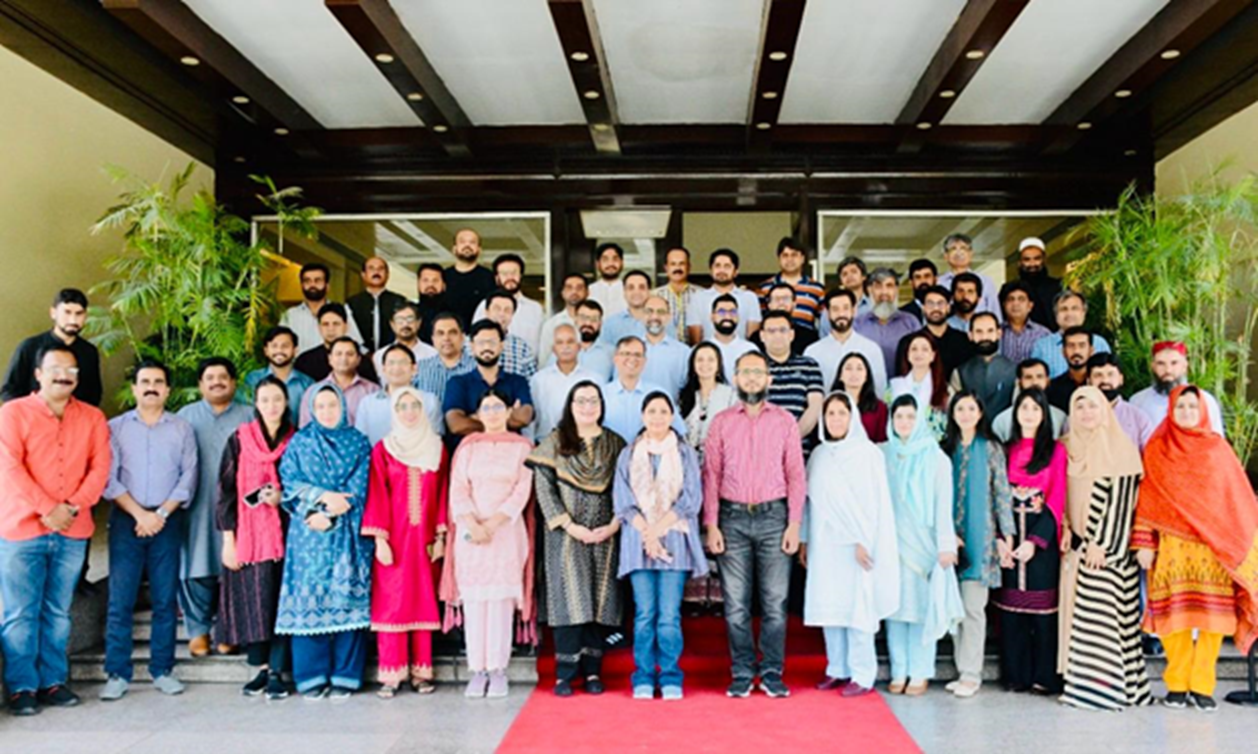
 On June 6th, 2024, the IWMI Pakistan SoLAR team, along with colleagues from IWMI, attended a meeting with World Bank officials and the On-Farm Water Management (OFWM) Department, Government of Punjab. The meeting provided updates on the PRIAT initiative and included a briefing on M. Zain Akbar’s field visit from June 1st to June 4th, 2024. During this visit, a paper-based survey was conducted with 24 farmers owning tubewells, collecting data on irrigation practices, cropping patterns, and water quality for both the Rabi and Kharif seasons.
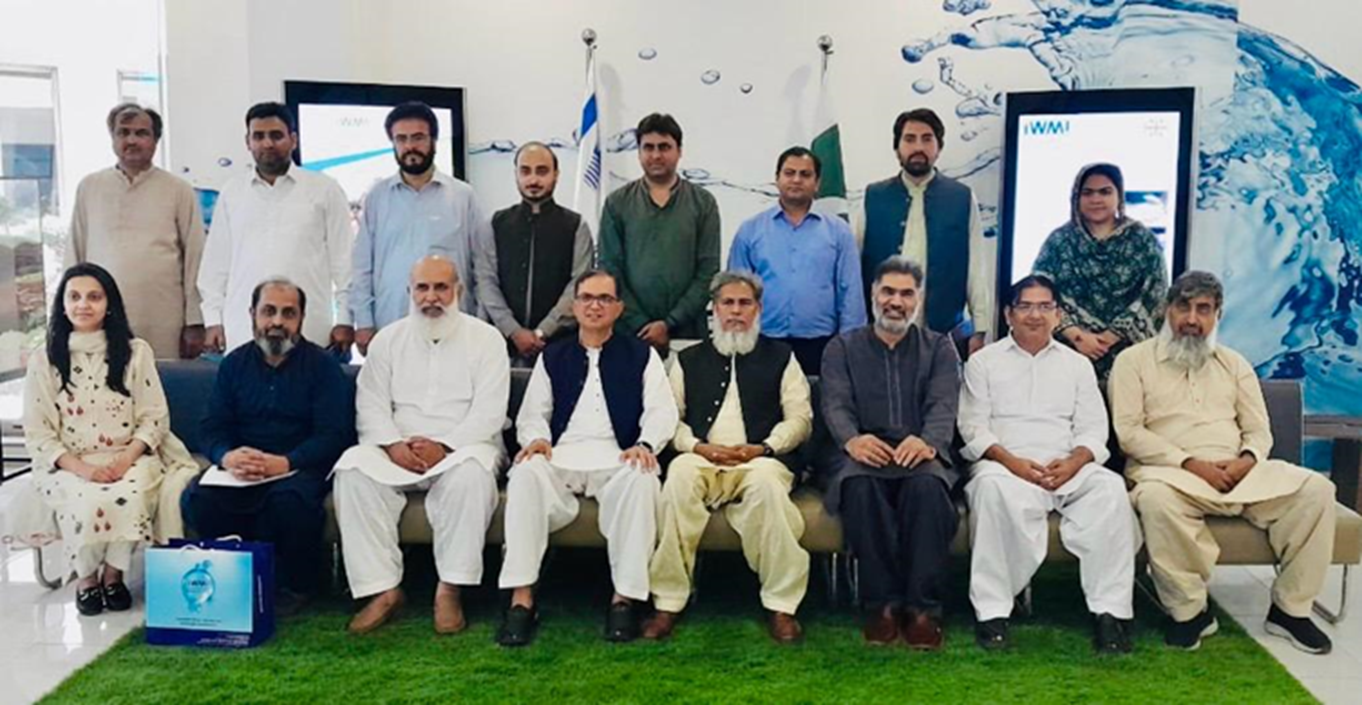 The SoLAR team and other IWMI Pakistan members met with officials from the Centre of Excellence in Water Resources Engineering (CEWRE) at the University of Engineering and Technology (UET) in Lahore on May 10th, 2024. They were given an overview of IWMI Pakistan and its project portfolio, which included SDC’s SoLAR-SA efforts in Pakistan. The officials expressed interest in partnering with IWMI on research and development initiatives.
IWMI-Pakistan hosted the international conference during the 3rd Pakistan Water Week 2023 from 4th to 6th December 2023 in Serena Hotel, Islamabad. This year’s Water Week served as a pivotal platform for the dissemination of knowledge and the stimulation of discourse aimed at addressing the challenges posed by climate change, water scarcity and food insecurity in Pakistan. It played a crucial role in enhancing public consciousness and fostering deliberations paving the way for viable solutions to these pressing issues.
The conference also facilitated the exchange of international scientific methodologies and guidance to allocate resources towards development expenditures and policy formulation through empirical research rather than mere conjecture.
A National Forum entitled Irrigation through SUN – Can we control the heat to sustain our groundwater aquifers? was exclusively held as part of the SoLAR initiative that took place within the Pakistan Water Week 2023 on 6th December 2023 under the Thematic Area: Technologies and Innovations: Responding to the Challenges of Water and Food Security. The session aimed at creating a general understanding of solar irrigation practices in Pakistan, with a special focus on IWMI’s research on solar pumping, alongside a goal of assessing a viable and sustainable trajectory for the agricultural sector with regards to SIPs. The forum also featured a detailed presentation of the Prime Minister Solarization scheme of tube wells in Pakistan from the Director General of the Federal Water Management Cell of the Ministry of National Food Security and Research.
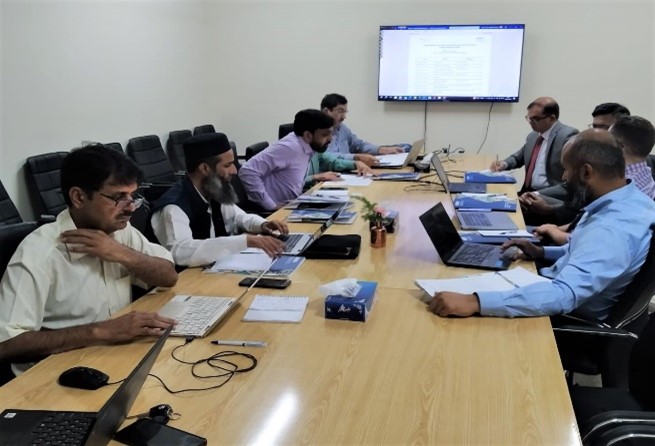 The 4th Country Project Management Committee (C-PMC) Meeting for the SoLAR Project took place at the Climate Energy & Water Research Institute (CEWRI) in the National Agricultural Research Centre (NARC), Islamabad on June 8, 2023. The participants at the meeting included Mohsin Hafeez, Country Representative International Water Management Institute (IWMI), Azeem Shah (IWMI), M. Zain (IWMI), Adeel Waqas and Kashif Imran from the National University of Science and Technology (NUST), Andrew Bell (Boston University), Bashir Ahmad and Khalid Jamil from Pakistan Agricultural Research Council (PARC), M. Ashraf from Khwaja Fareed University of Engineering & Information Technology (KFUEIT) and Muhammad Muzzamil of Buraq Integrated Solutions. At the meeting, there were presentations on each component of the SoLAR project followed by intensive discussion on the results. Azeem Shah (IWMI Pakistan) gave an overview of the project activities while Khalid Jamil (PARC) presented on the innovation fund trials, experimentation and training M. Ashraf (KFUEIT) presented on the precision surface irrigation trials and capacity building training. Andrew Bell presented the results of choice experiments to determine the farmer’s behavior while Muhammad Muzzammil of Buraq Integrated Solutions presented on in-situ instrumentation. Before closing the meeting, future activities of the project were discussed.
 Learnings from SDC SoLAR projects were shared with the Ministry of National Food Security and Research to design the agri-solarization scheme launched by the Government of Pakistan.
Pakistan Prime Minister Shahbaz Sharif announced the approval of a 10,000 MW solar energy project aimed at reducing import bills that come from importing costly diesel and furnace oil. The scheme has included solarization of 100,000 tube wells across Pakistan with a cost of PKR 377. The federal government, respective provincial governments and the farmers will equally share the costs of these tube wells. Identifying Farmers for In-situ Instrumentation in Punjab, Pakistan
From 7th March to 11th March 2022, members from SoLAR – Pakistan, IWMI, visited 12 sites in three districts of Punjab – Chakwal, Jhang and Rahim Yar Khan – to identify 12 sites to be monitored with in-situ instrumentation. These would include 6 diesel and 6 SIPs..Read more..
Expanding on International Water Management Institute’s (IWMI) mission to provide sustainable and climate friendly water solutions..Read more..
IWMI Pakistan organised a two-day training on the WinSRFR model from 22-23 December 2020 on designing a farmer field using..Read more..
A telephonic survey with SIP farmers was conducted between November and December 2020 to assess water use patterns among SIP farmers in Punjab..Read more..
Partners
Infrastructure Development Company Limited (IDCOL), Bangladesh IDCOL is a government-owned financial institution established in 1997. IDCOL encourages private sector participation in infrastructure and energy projects and they are currently the largest financier for renewable energy projects in Bangladesh. IDCOL is also the primary agency supporting the mainstreaming of solar pumps: to date, over 90% of the solar pumps installed in the country have been financed through IDCOL and they have a target of installing a total of 50,000 solar pumps by 2025. IDCOL works with all relevant stakeholders in the solar irrigation sector including NGOs, Sustainable and Renewable Energy Development Agency (SREDA), academics, private companies, the federal government, solar pump manufacturers, development partners, and the farmers of Bangladesh. IDCOL is an approved grantee of the Global Climate Funds (GCF). IDCOL’s vast experience in this sector, coupled with a capable workforce and extensive network with both local- and national-level stakeholders make them an ideal partner for working in Bangladesh. Gujarat Energy Research and Management Institute (GERMI) in India Gujarat Energy Research & Management Institute (GERMI) is a centre of excellence in the energy sector and is promoted by Gujarat State Petroleum Corporation Limited (GSPC), a Government of Gujarat Undertaking. It has four key mandates: training, education, consultancy, and research and development. GERMI is a registered Society and Trust under the Societies Registration Act, 1860, and the Bombay Trust Act, 1950. It is also a recognized Scientific and Industrial Research Organization (SIRO) by the Department of Scientific and Industrial Research (DSIR), Government of India. GERMI has been a key player in the design of the Government of Gujarat’s solar policies, including the Dhundi-inspired Suryashakti Kisan Yojana (SKY). IWMI and GERMI have been working closely on climate-smart promotion of solar irrigation in Gujarat since 2013-14. Pakistan Agricultural Research Council (PARC) Pakistan Agricultural Research Council (PARC) is the apex national organization working in close collaboration with other federal and provincial institutions in the country to provide science based solutions to agriculture of Pakistan through its statutory functions. Its primary functions include: Federal Water Management Cell (FWMC), Pakistan The Federal Water Management Cell (FWMC) is hosted by the Ministry of National Food Security and Research (MNFS&R), which is also the host Ministry for IWMI in Pakistan. MNFS&R is primarily responsible for policy formulation and economic coordination and planning for food grains and agriculture. It is also responsible for procuring fertilizer and food grains, stabilizing import prices for agricultural produce, and liaising internationally with other countries and institutions for framing agricultural policies. There are multiple organizations with MNFS&R that perform other functions in support of this overarching mission and they will be key implementing partners in the proposed project. FWMC was established in 1979 and it provides strategic support to MNRS&R for formulating policies at the federal level in consultation with the respective provinces. Alternative Energy Promotion Centre (AEPC) Nepal AEPC is a government institution established in 1996 with the objective of developing and promoting renewable energy technologies in Nepal. It works under the Ministry of Energy, Water Resources, and Irrigation. AEPC functions independently and has a board with representatives from the government, industry, and non-governmental organizations. The mission of AEPC is to make renewable energy a mainstream resource through increased access, knowledge, and adaptability that contributes to improving the living conditions of people in Nepal. AEPC has supported over 1,200 pumps for solar irrigation over the last three years with a 60% subsidy. AEPC is keen to collaborate with this project to evaluate the impact of projects implemented so far and to identify suitable models for moving forward. AEPC will be support SoLAR SA with data and information, access to project implementation sites, and advice regarding needs and gaps in SIP promotion. Nepal Electricity Authority (NEA) NEA was created in 1985 after the merger of the Department of Electricity of Ministry of Water Resources, Nepal Electricity Corporation, and related development boards. The primary objective of NEA is to generate, transmit, and distribute adequate, reliable, and affordable power by planning, constructing, operating, and maintaining all generation, transmission, and distribution facilities in Nepal’s power system, both interconnected and isolated. NEA has established a net metering policy (2074 BS); however, it has yet to implement this metering for SIPs, primarily because the technology is new and people will need more education about the technology before adopting it. Therefore, NEA, AEPC and SoLAR-SA have an opportunity to demonstrate SIPs through a pilot so that we can provide evidence for wider replication. NEA will establish a demonstration pilot for the purpose of promoting grid-connected SIPs.