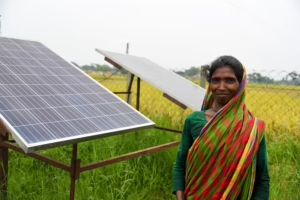
Sumi Mardi from Dinajpur, Bangladesh, explains that because of delayed monsoons, farmers in the region have turned to groundwater irrigation to sustain their livelihoods. Photo: Tanmoy Bhaduri/IWMI
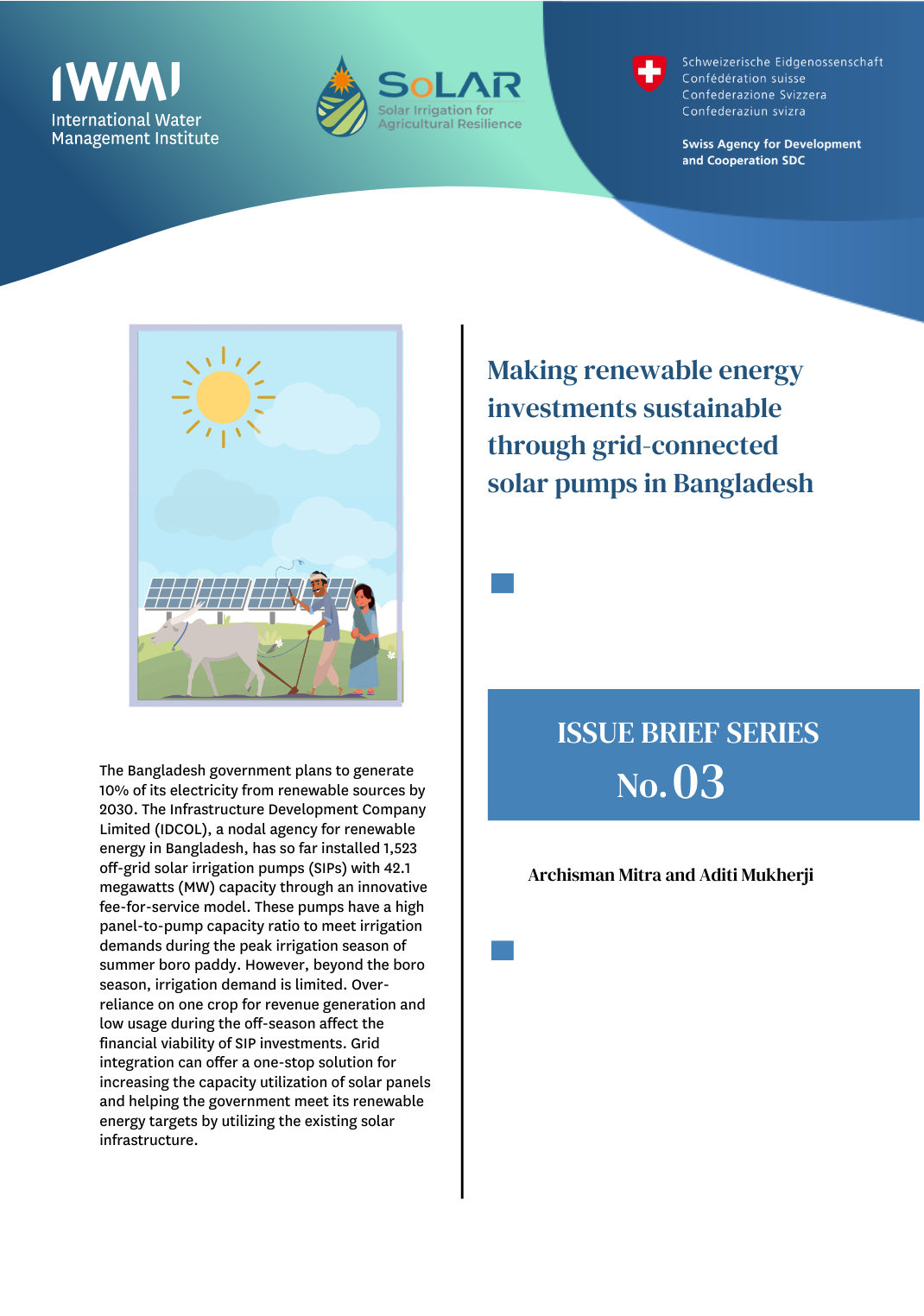
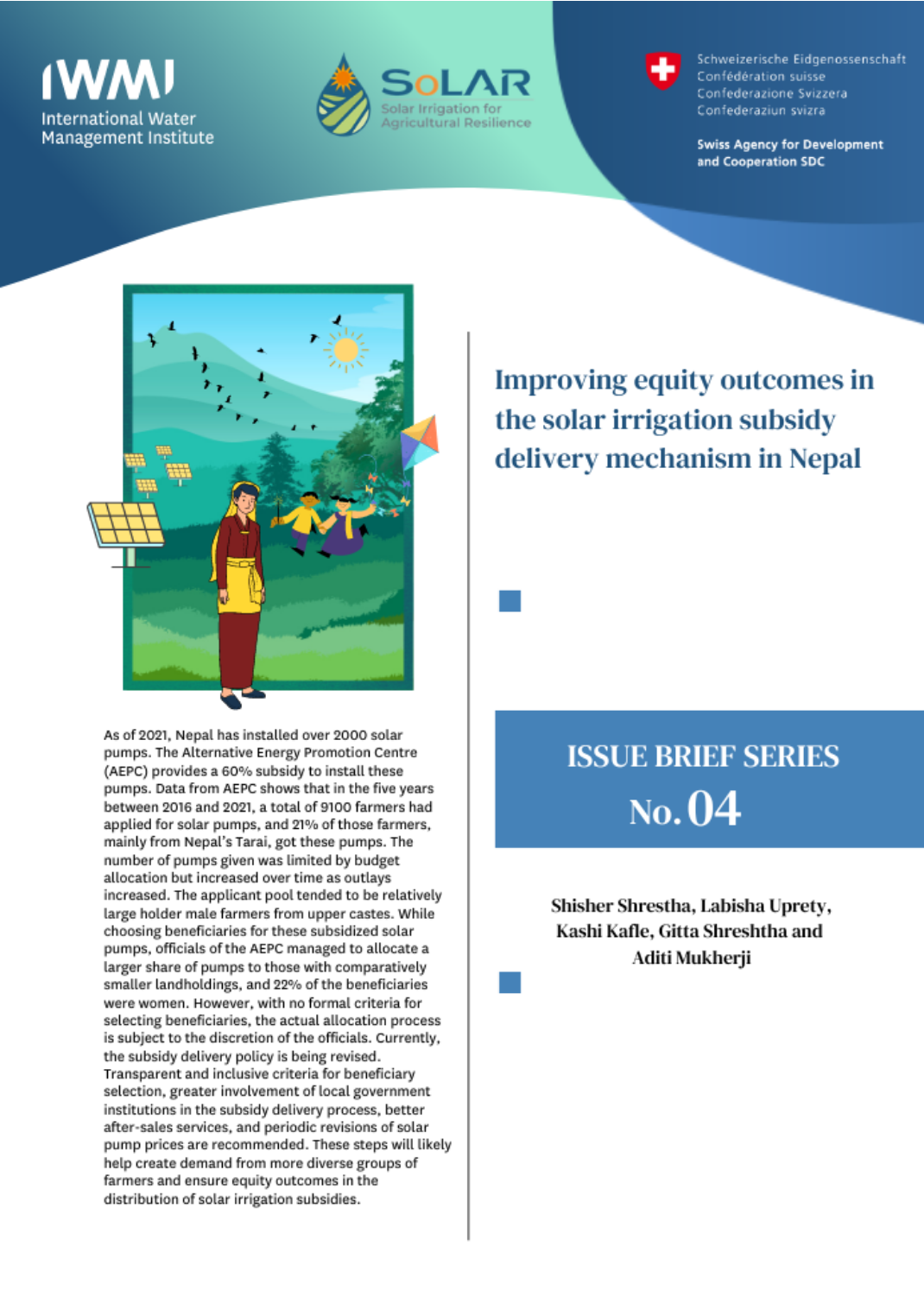
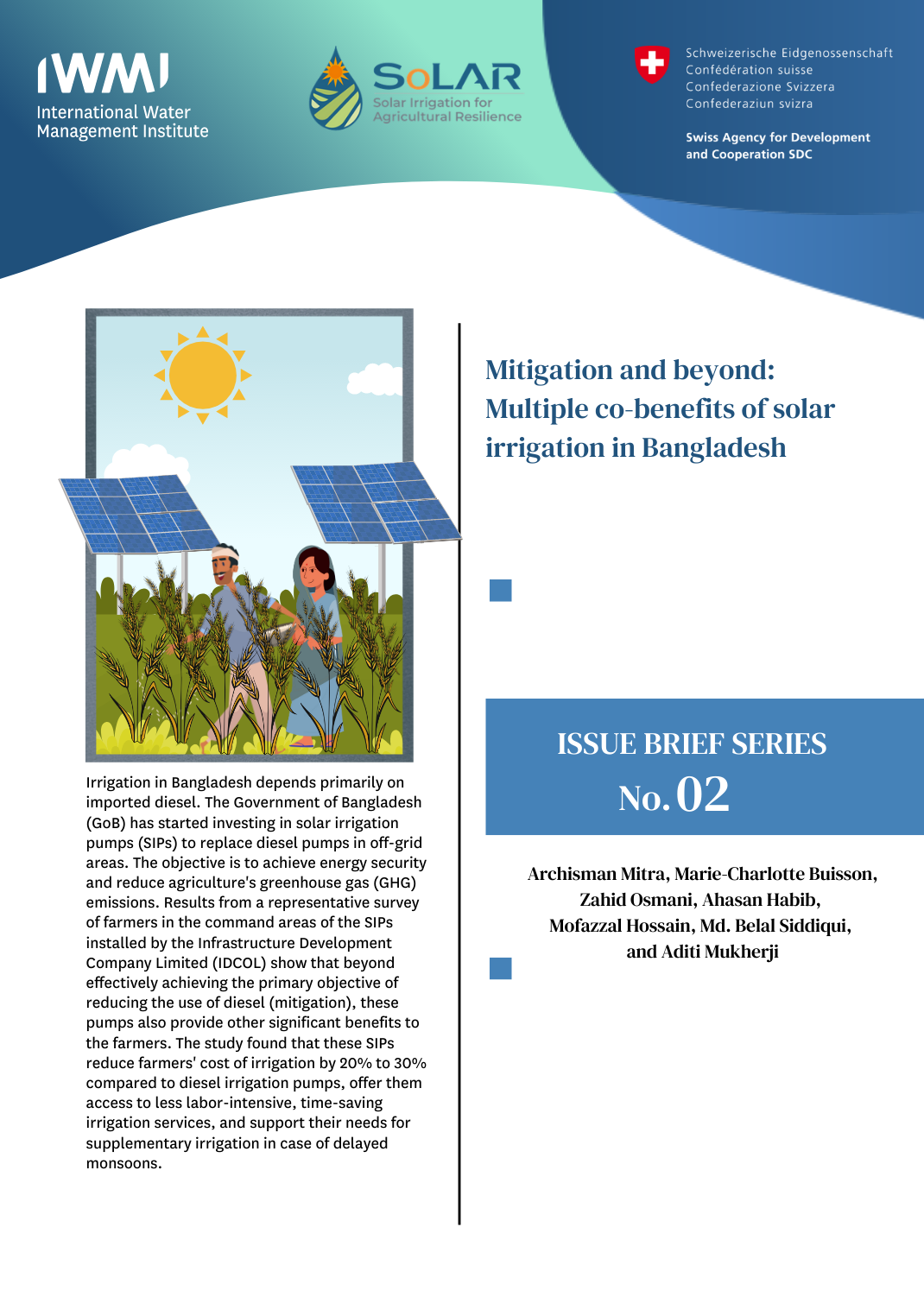
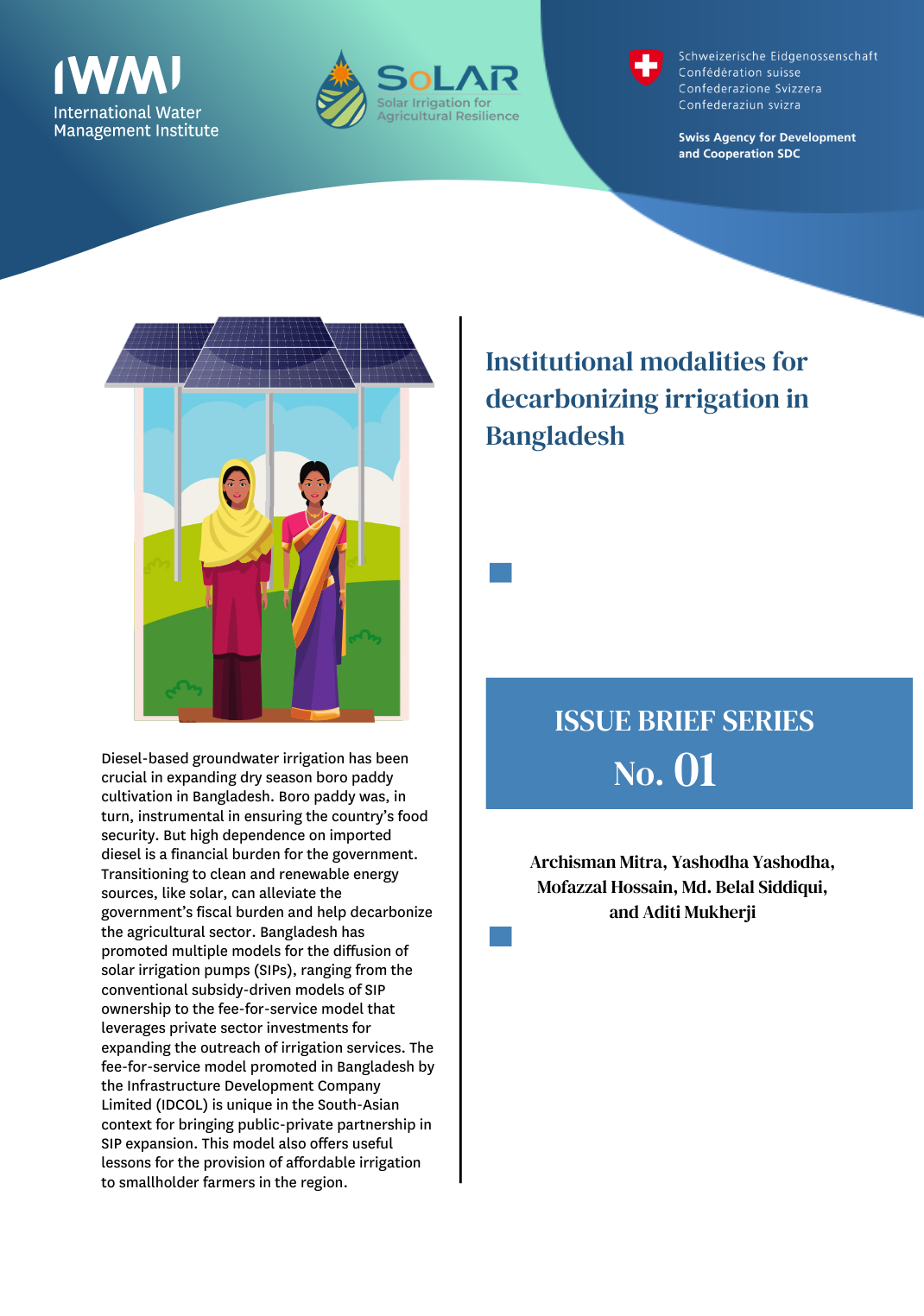
Phase 1 research demonstrated that solar-powered irrigation pumps in Bangladesh reduce irrigation costs by up to 30%, save time, and enhance energy security by replacing imported diesel. Bangladesh is an important focus under SoLAR Phase 2 due to its large agricultural sector and increasing pressure on water and energy resources. The country aims to gradually replace diesel pumps, where the Swiss Agency for Development and Cooperation (SDC) Solar project contributes by providing evidence-based policy guidance and by piloting inclusive financing models that support smallholder adoption of solar irrigation.
Phase 2 activities include the development of Water, Energy, Food and Solar Suitability (WEF SS) maps, capacity building for government officials and farmers, and testing bundled solar agricultural technologies. The project is also working on new financing mechanisms targeted at marginal and women farmers. Pilot initiatives assess the feasibility of grid-connected solar pumps and their integration within existing irrigation systems.
SoLAR works with government agencies, private sector partners, and local non-governmental organizations such as the Bangladesh Agricultural Development Corporation (BADC), Infrastructure Development Company Limited (IDCOL), Department of Agricultural Extension (DAE), and the Barind Multipurpose Development Authority (BMDA) to improve awareness, address groundwater sustainability challenges, and ensure that the expansion of solar irrigation is aligned with Bangladesh’s Nationally Determined Contributions (NDCs) and National Adaptation Plan (NAP).
Partners :
Infrastructure Development Company Limited (IDCOL), Bangladesh
Infrastructure Development Company Limited (IDCOL) is a government-owned financial institution established in 1997. IDCOL is Bangladesh’s primary solar irrigation financier and the anchor organization for scaling SoLAR pilots, innovative financing models, and mainstreaming solar pumps in agriculture. Their partnerships span government ministries, SREDA, NGOs, private sector, and farming communities.
Department of Agricultural Extension (DAE), Bangladesh
DAE, the largest government extension service provider, spearheads farmer training, field demonstrations, and grassroots outreach. DAE’s collaboration ensures SoLAR’s technical, social inclusion, and capacity-building objectives reach a wide range of farmers, particularly women and marginalized groups.
Bangladesh Agricultural Development Corporation (BADC), Bangladesh
BADC is the Ministry of Agriculture’s key institution for irrigation. In SoLAR Phase 2, BADC provides knowledge, implementation support for minor irrigation schemes, and valuable policy research collaboration.
Sustainable and Renewable Energy Development Authority (SREDA), Bangladesh
SREDA is the national regulatory authority for renewables. SREDA’s policy and regulatory guidance is essential for mainstreaming SoLAR findings at the national level.
Barind Multipurpose Development Authority (BMDA)
BMDA supports irrigation development, particularly in the Barind region, collaborating on pilot projects and solar irrigation expansion.
NGO Forum
NGO Forum works alongside government and development partners to support community-level adoption and sustainable practices for solar agri-tech.
Bangladesh Agricultural Research Council (BARC)
BARC provides research support and collaborates on innovations to improve the effectiveness and adoption of solar irrigation technologies.